In Orthodoxy, salvation is understood as theosis, or deification. This means that humans are called to become partakers of the divine nature (2 Peter 1:4). The purpose of salvation is not merely forgiveness of sins, but a transformative process through which believers become united with God, involving both faith and works, grace, and human cooperation. One can become God, not by nature, but by God’s Divine Grace through His energies.
The Church recognises seven sacraments (or mysteries): Baptism, Chrismation, Eucharist, Confession, Marriage, Holy Orders, and Unction. These are seen as means through which believers receive grace. The Divine Liturgy, particularly the Eucharist (Holy Communion), is the central act of worship and is considered both a commemoration and a real participation in Christ’s sacrifice.
Orthodox doctrine places significant emphasis on Holy Tradition, which includes the teachings of the Church Fathers, the Ecumenical Councils, and practices passed down over generations. Holy Tradition complements and interprets Holy Scripture, ensuring that the faith remains consistent and true to its apostolic roots.
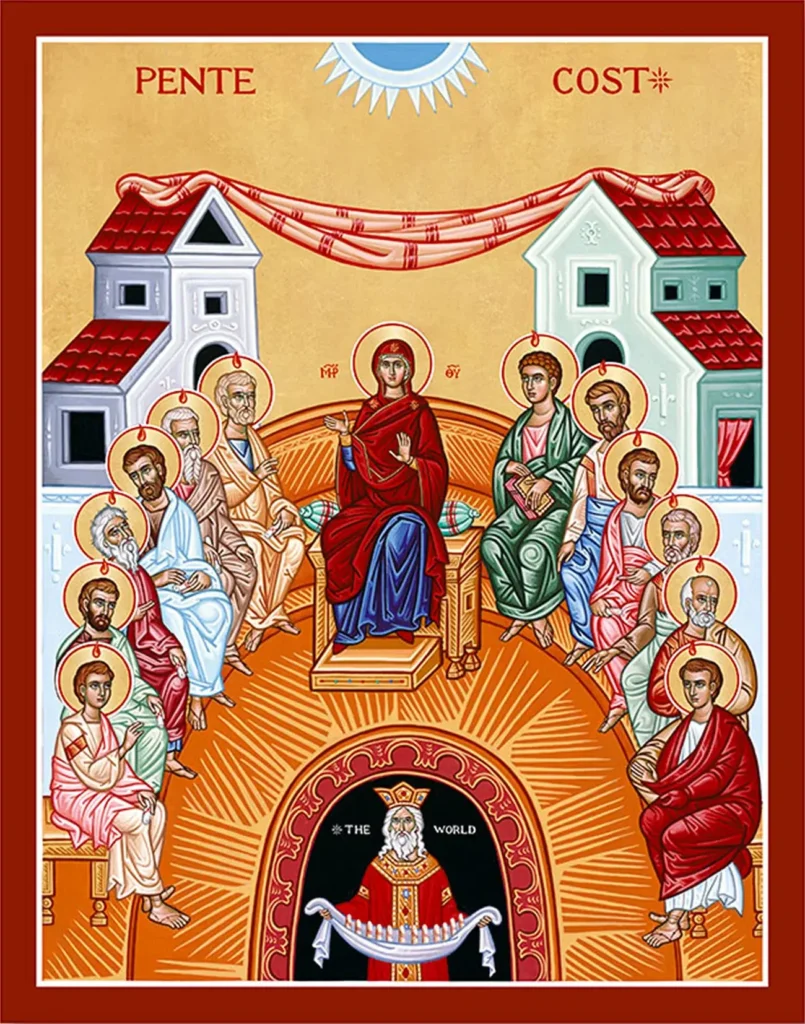
The veneration (not worship) of icons is a key practice in Orthodoxy. Icons are visual representations of Christ, the Theotokos (Mother of God), and the saints, serving as windows to the divine. The Seventh Ecumenical Council (787 AD) affirmed their use, emphasising that honour given to icons passes to their prototype.
The Orthodox Church views itself as the One, Holy, Catholic, and Apostolic Church. It sees its mission as safeguarding and transmitting the true faith, guiding believers toward spiritual growth, and serving as the living Body of Christ on earth.
These core doctrines reflect a deep commitment to continuity with Christ and the early Church. They emphasise mystery, communal worship, and a path toward spiritual transformation and union with God.